
Foundation Ring: Your Body and Your People
Spring Forest Qigong, Explained Plainly
Qigong is a Chinese practice combining slow movement, controlled breathing and focused attention. Spring Forest Qigong is a simplified form of it developed by Chunyi Lin. In practice it looks like breath and movement work aimed at calming a nervous system that has been running in high alert, not incense, and not a ritual.
What Problem Is It Actually For?
A body stuck in a stress response. When the Foundation ring is the one under strain, the pattern is usually physiological rather than psychological: sleep that doesn't restore, a resting heart rate that won't settle, a short fuse with the people closest to you. Telling someone in that state to focus harder doesn't work, because the capacity genuinely isn't there to draw on.
What Does a Session Actually Look Like?
Standing or seated movements, slow and low-effort, paired with specific breathing. No equipment, no flexibility requirement, nothing strenuous. Most of it is learnable well enough in one session to practise on your own, which is the point: the goal is something you can do without a practitioner in the room.
Do I Have to Believe in Energy for This to Work?
No. The breath and movement components stand on their own, and that is the part of the practice used here. You can hold whatever view you like of the traditional framing around it; nothing in the work requires you to adopt it.
Where Does It Come From?
Chunyi Lin developed Spring Forest Qigong and has run it as an organisation for over thirty years, including research partnerships with the University of Minnesota and Mayo Clinic.
Evidence: One Randomized, Controlled, Peer-Reviewed Trial
This has the strongest evidence base of anything used in this practice, and stating that accurately means being exact about what was tested. A randomised controlled trial run through Mayo Clinic and the University of Minnesota assigned 50 chronic-pain patients to weekly 30-minute sessions of EXTERNAL qigong (the practitioner-delivered form, where a trained person works on you) or to an attention-matched control. It found statistically significant reductions in pain intensity in weeks two, three and four. The limits matter as much as the result, so here they are in full: the trial tested the practitioner-delivered form as an adjunct to pain medication, not the breath and movement you would practise yourself; 74% of subjects were receiving other treatments at the same time; the paper does not name Spring Forest Qigong; the difference was no longer statistically significant at the eight-week follow-up; the study could not be blinded; and it measured pain, not clarity, energy or productivity. Most sites in this field blur the practitioner-delivered form and the self-practice into one claim. They are separated here on purpose. This does not establish that qigong cures anything.
Vincent A, Hill J, Kruk KM, Cha SS, Bauer BA. “External Qigong for Chronic Pain.” American Journal of Chinese Medicine 38(4):695–703 (2010).
My Training in This
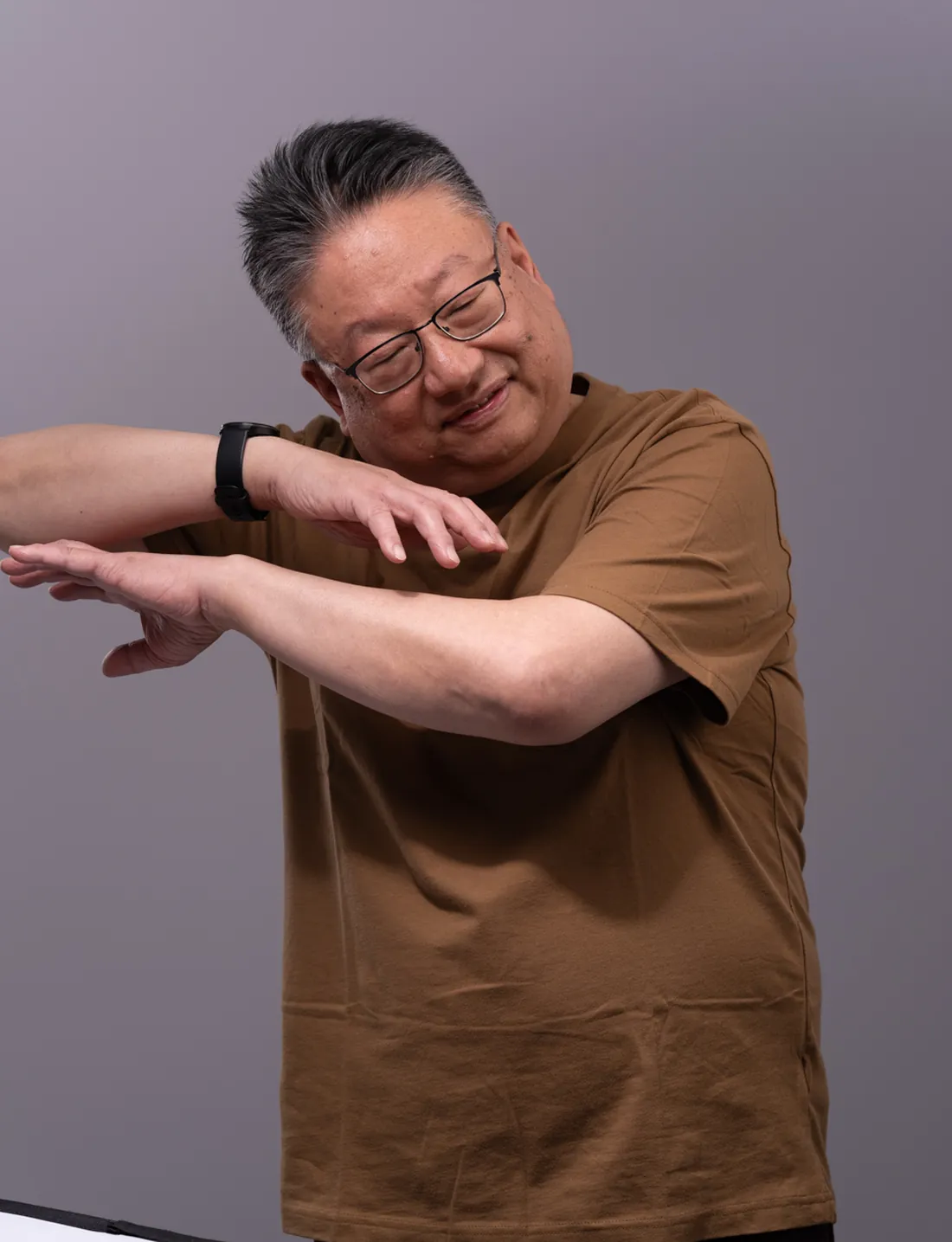
I hold all three Spring Forest Qigong certifications: Certified Trainer, Certified Healer and Certified Instructor. This is also where my own practice began: qigong is what I found when conventional treatment had only managed the symptom.
This is one of the tools used when the scorecard points at the Foundation ring. It is not used with everyone, and it is never the starting point.
This supports personal growth and stress management. It does not diagnose, treat, or cure any medical or mental health condition, and it is not a substitute for medical or psychological care.